Hidden In Plain Sight
The axioms, signals and communications that ACTUALLY run organizations.

I love it when a few anecdotes or passages pop up and help me triangulate something I have been sitting on that either make the idea I have been floating around with more clear and impactful, or helps push my thinking.
This piece is choppy by design.
Let’s flood the zone, synthesize later.
Axioms
“a statement or proposition which is regarded as being established, accepted, or self-evidently true.”
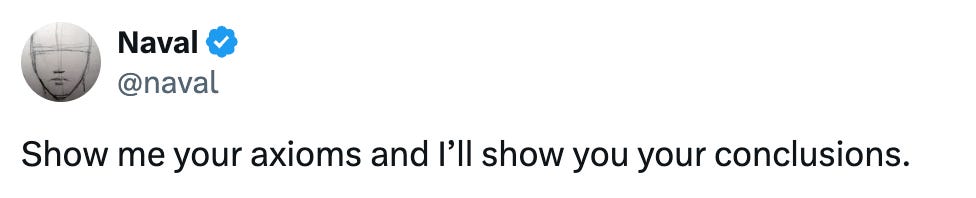
Taking a leap, our work and workplaces, our conversations, (and decisions) are filled and guided by axioms.
If I were to start all over again, I’d have kept a notepad at all the places I have worked capturing the simple truths that were relayed over and over. They are more a feature of a culture than anything I suspect we find on a company’s webpage describing how they make decisions and behave.
I first was introduced to the concept linguistic abstractions by Chip Wilson on Tim Ferris. Wilson, the founder of Lululemon, references them as a key feature of the culture that helped that company scale and grow (including its people).
Every business I’ve been employed full time in, still exists.
Some have grown, some have decreased in size, others while not have grown per se have significantly increased revenues by moving to a more premium or luxury position.
When I reflect back, and am thankful to keep some sort of connection to all of them, it’s easier to see the axioms that have held or propelled to where they are now.
It’s a bit of distance and perspective that offers it - plus knowing they exist and how underrated they are.
Some examples of where axioms and simple stories shaped outcomes:
A leadership group that embraced its positioning as a luxury product and pivoted its business accordingly; but employees didn’t universally feel or identify they were involved in producing luxury. There was a disconnect between the cultural belief and the strategy.
A portfolio business with separate B2C and B2B offerings that maintained the “simple story” that B2C was a lead generator for B2B when the evidence from lead attribution told a different story. Applying “universal truths” from one context to another kept it from growing.
Some examples to illustrate the concept.
Would be curious, if you gave it some thought in your context what are some “truths” collectively or partially shared in your view that hold things back or help move things forward?
Distinct Languages
Every culture has a way in which it communicates.
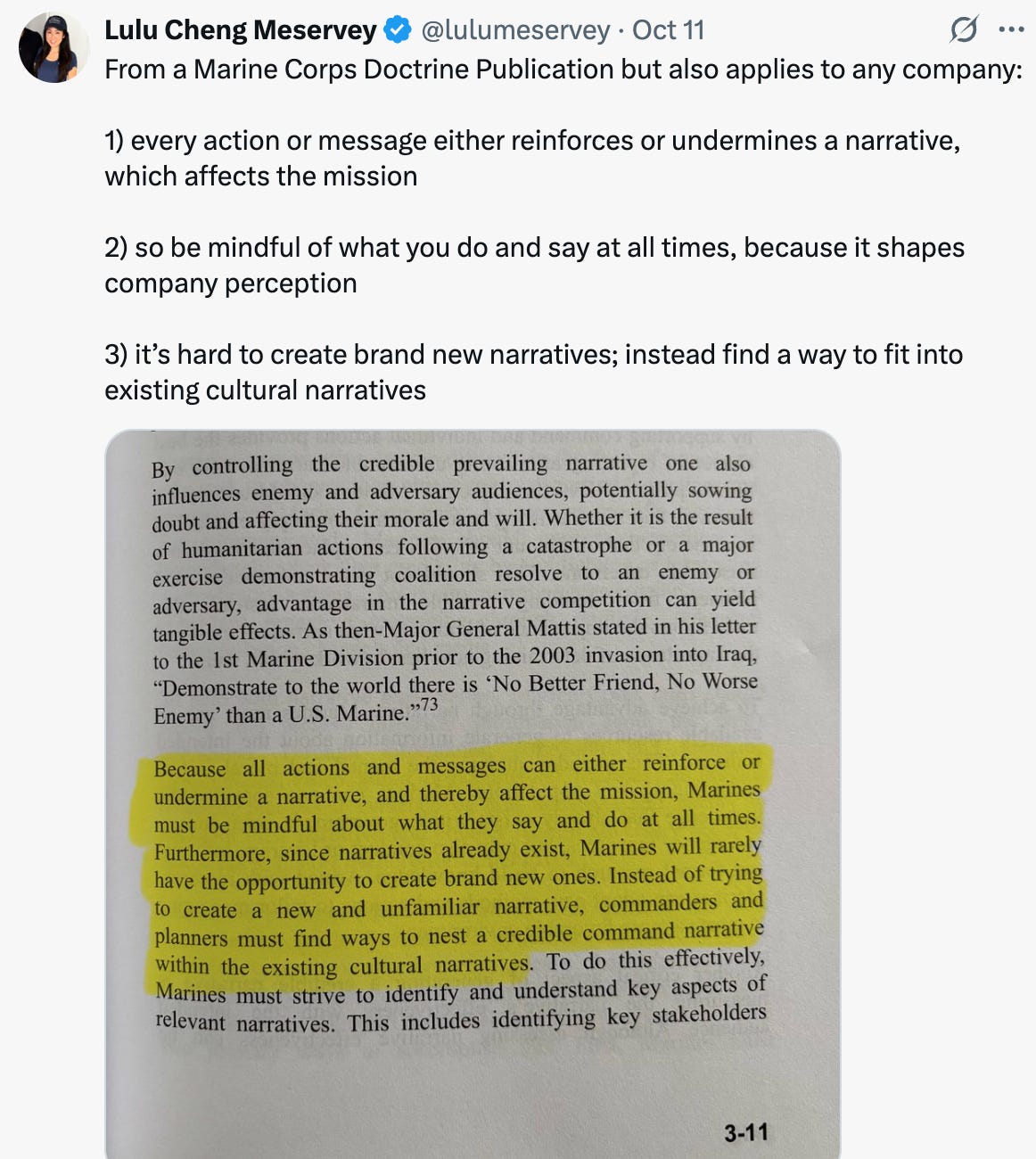
I think it’s the ultimate differentiator.
And not just in terms of achieved business outcomes, but also how people experience the work they are doing and one another.
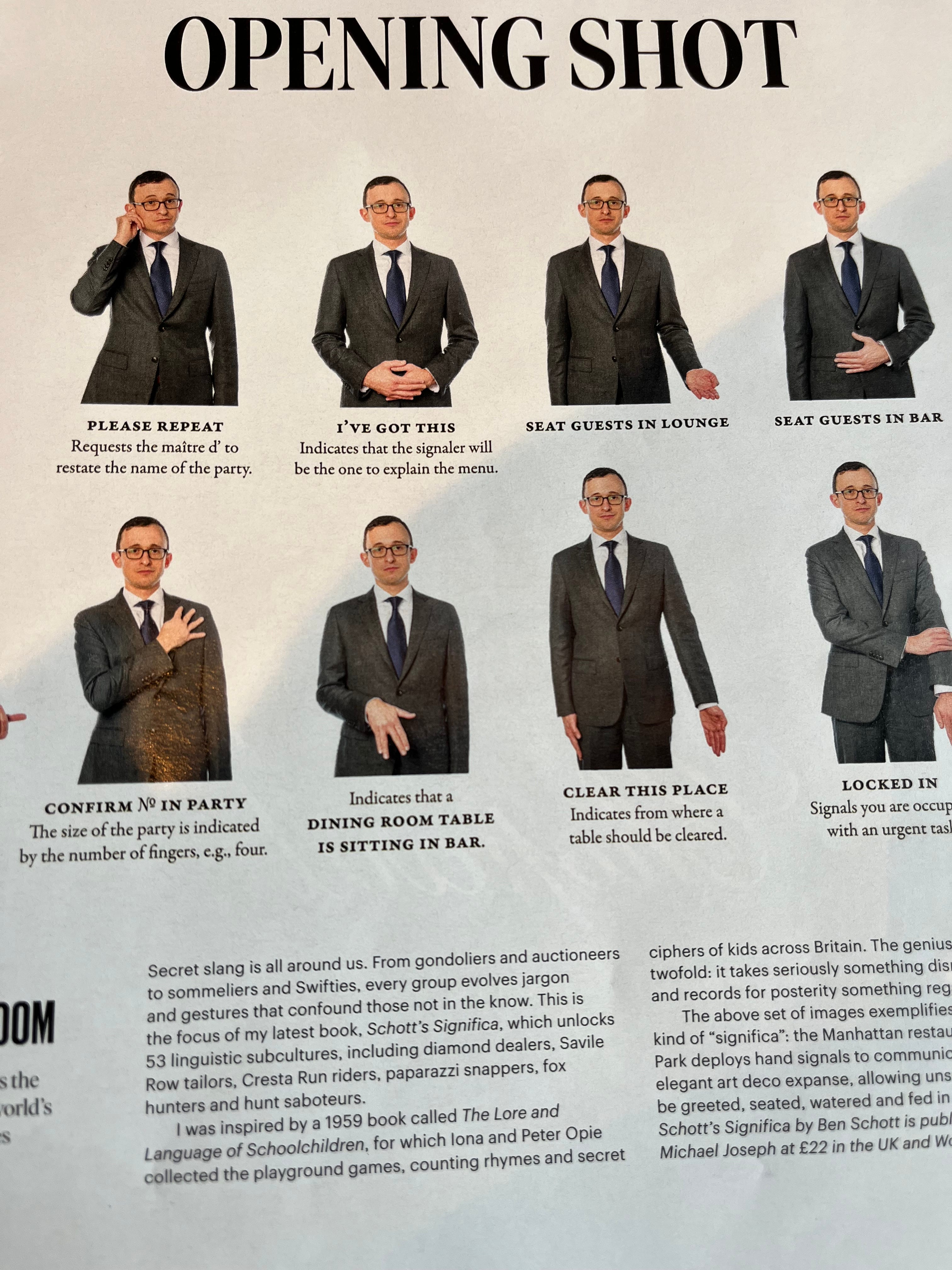
I saw this in FT Weekend a few weeks back. An example of non-verbal communication. That turns out to be quite powerful.
These are the hand signals staff at Eleven Madison Park use to communicate as they orchestrate 3-Star Michelin dining experiences. The simplicity and straightforwardness of it is beautiful.
I have a friend who used to work there, so I reached out sharing the above asking:
In one sentence what comes to your mind when you think of working there?
Mostly what I reacted with, was the emotion of feeling seen.
We communicated like this and to be able to communicate with your team in this way with no miscommunication contains feelings that words elude me for!
These examples remind me the comfort and ease of fluency.
I think language being so largely associated with learning an additional language it’s easy to forget we are all constantly navigating multiple languages a day.
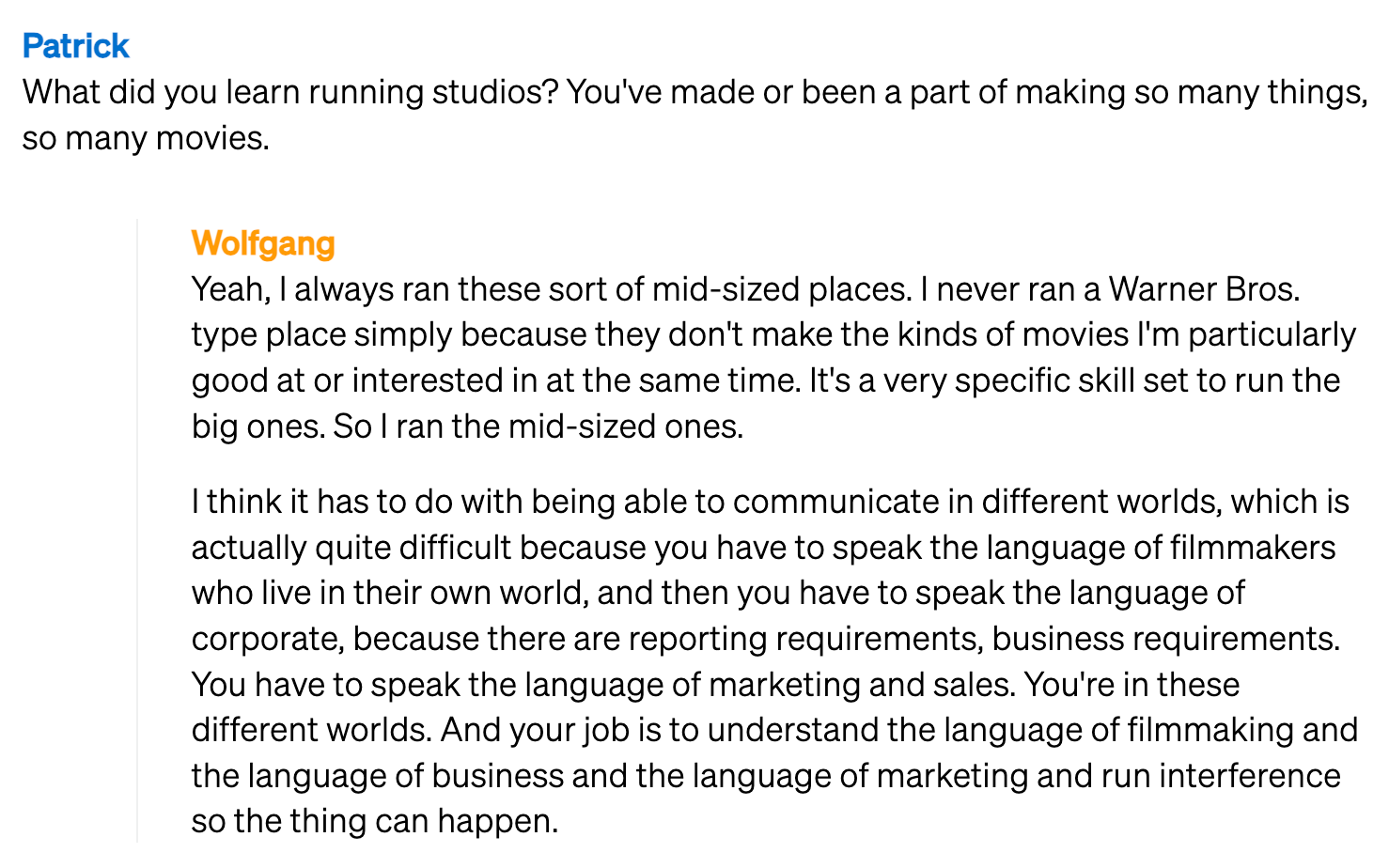
And again to drive this home.
“I think it has to do with being able to communicate in different worlds, which is actually quite difficult because you have to speak the language of filmmakers who live in their own world, and then you have to speak the language of corporate, because there are reporting requirements, business requirements. You have to speak the language of marketing and sales. You’re in these different worlds. And your job is to understand the language of filmmaking and the language of business and the language of marketing and run interference so the thing can happen.
The Power of Story with Wolfgang Hammer on Invest Like The Best (Links Below)
Swap out film in this for any craft, product, service that makes up part of your narrative environment and this applies, especially true for leadership or bridge builders inside an organization.
Funnily, I only got to write this because my 3pm asked to reschedule. The conversation with that person is about how they lead a team of design strategists in an engineering culture and they need help communicating, translating and even vibe-ing across the disciplines.
Meme of The Week
Made me laugh.
TGIF. Have a great weekend!